
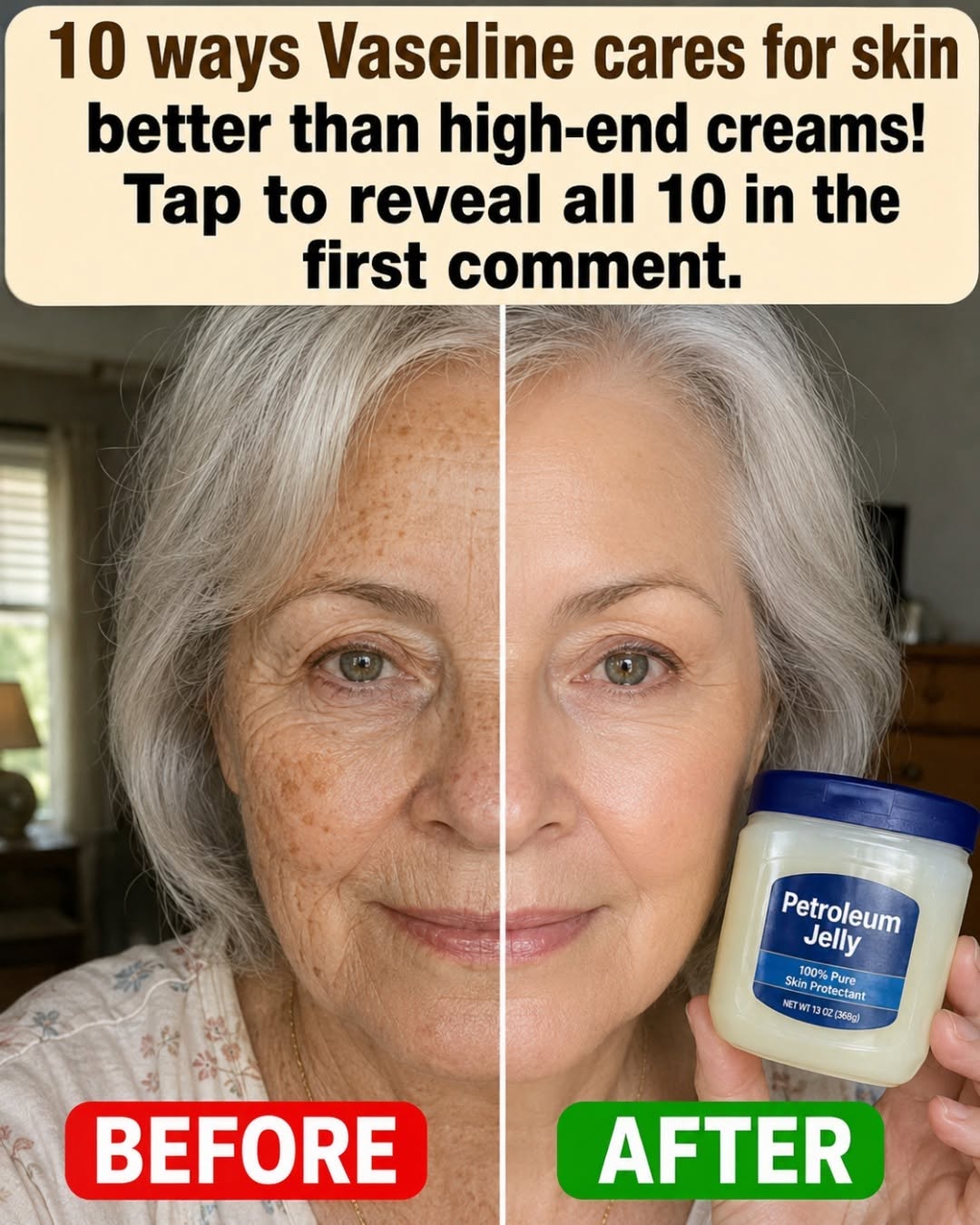
Vaseline doesn’t just sit on dry skin and look harmless. It seals in moisture, traps softness, and locks down the kind of water loss that leaves cheeks tight, lips split, heels rough, and hands looking like they’ve been sandblasted.
That’s why the same jar keeps showing up in bathrooms, bedside tables, and coat pockets. Not because it’s fancy. Because when skin is stripped raw by cold air, hot showers, shaving, and endless hand washing, Vaseline throws a barrier over the damage and stops the bleeding of moisture before it gets worse.
Dry skin is not a cosmetic nuisance. It’s skin that’s losing its grip, one crack at a time.
By late afternoon, your face feels stretched. Your lips catch on themselves when you talk. Your knuckles look chalky, your heels snag sheets at night, and every swipe of lotion disappears like it was never there.
That’s the ugly part high-end creams often miss: they can feel rich, but if the water escapes, the skin keeps begging for more. Vaseline changes the game by acting like a lock on a leaking tank.
The body already knows how to hold moisture. The problem is the seal keeps failing.
The Moisture Lock That Changes Everything
Think of your skin like a brick wall after a storm. The cells are the bricks, and the lipids between them are the mortar. When that mortar gets weak, water slips out through the gaps, and the wall starts to crumble at the edges.
Vaseline steps in like a thick weatherproof film over the whole surface. It doesn’t chase the problem around the body. It covers the escape route, so the moisture already there stays where it belongs.
That’s why people notice the first shift in the spots that usually fail first: around the mouth, across the hands, along the heels, and over the elbows. The skin stops feeling like parchment and starts feeling sealed, protected, less angry.
And here’s the part the beauty aisle rarely says out loud: Wall Street doesn’t build empires around a $3 jar that works by simply reducing water loss. The supplement and luxury cream machine survives on complicated labels and glossy promises. Vaseline survives because it does the blunt, unglamorous job that skin actually needs.
One layer at night, and the next morning your face doesn’t feel like it spent eight hours under a desert wind. Your hands don’t snag on fabric. Your lips don’t split the second you smile.
Why Lips, Hands, and Heels Feel It First
Lips are the first to scream because they have almost no defense. They’re like exposed wiring in a wet storm: every dry gust, every cold sip of air, every lick of the tongue strips them again.
A thin coat of Vaseline acts like a rain shield over that exposed surface. It doesn’t add drama. It stops the damage from getting louder.
Hands and heels tell a different story. They take the punishment of the day, then get ignored until the cracks show up. By evening, your fingertips feel rough enough to catch on paper, and your heels can look like dried riverbeds split by heat.
Cover them with Vaseline and the skin gets a chance to stop fighting for survival. The surface softens, the rough edges flatten, and the next time you step out of bed, your feet don’t feel like they’re dragging over gravel.
Dry skin doesn’t need more noise. It needs a barrier that shuts the leak.
Why Shaving, Cold Wind, and Hot Water Make It Worse
Shaving scrapes away more than hair. It leaves the skin open, irritated, and exposed like a fence with the boards ripped off.
Hot water does its own damage. It strips the natural oils that help keep the surface supple, then leaves behind that tight, squeaky feeling that makes you reach for cream again and again. Cold wind finishes the job by pulling moisture out of the top layer until the skin starts to sting.
Vaseline cuts across all three problems at once. It doesn’t try to impress the skin with perfume or a long ingredient list. It blocks the escape hatch and lets the surface recover without being battered every few minutes.
That’s why a tiny amount on freshly shaved skin can change the whole day. The stinging backs off. The redness calms down. The area stops feeling like it’s being rubbed with sand.
And once you understand that, the logic becomes obvious: the cheapest fix often gets the least airtime, because it doesn’t sell fantasy. It sells results.
Why the Face Looks Better When the Barrier Holds
The face shows the truth first. Fine lines look deeper when skin is dry, not because time suddenly sped up, but because the surface has collapsed inward.
When Vaseline sits on top of well-moisturized skin, it acts like a clear roof over a greenhouse. The water underneath stays put, the surface looks plumper, and the whole face stops broadcasting stress every time the light hits it.
That’s the difference people notice in the mirror: less tightness, less flaking, less that paper-dry look around the nose and mouth. The skin doesn’t turn into a new person. It simply stops leaking.
Hands can get the same treatment at night. Coat them, slip on cotton gloves, and let the barrier do its work while the world is asleep. In the morning, the skin feels less brittle, less raw, less like it spent the night in a furnace.
Heels and cuticles respond in the same way. They’re small areas, but they reveal the whole story: when moisture stays in, the skin stops splitting apart at the edges.
The real secret isn’t adding more product. It’s stopping the escape.
The Part Most People Get Wrong
Most people smear Vaseline onto completely dry skin and expect magic. That’s like putting a lid on an empty pot and wondering why nothing changes.
The barrier works best after moisturizer, not instead of it. Seal in the water first, then lock it down. Skip that step and you trap dryness under a shiny coat, which is not the same thing at all.
That single detail changes the entire result. It’s the difference between skin that feels sealed and skin that just looks greasy for an hour.
One common habit kills the effect before it starts: overusing it on dirty, unprepared skin and calling that “hydration.” The next topic is the pairing that turns a basic barrier into a real overnight reset.
This article is for informational purposes only and does not replace professional medical advice. Please consult your healthcare provider for personalized guidance.
