
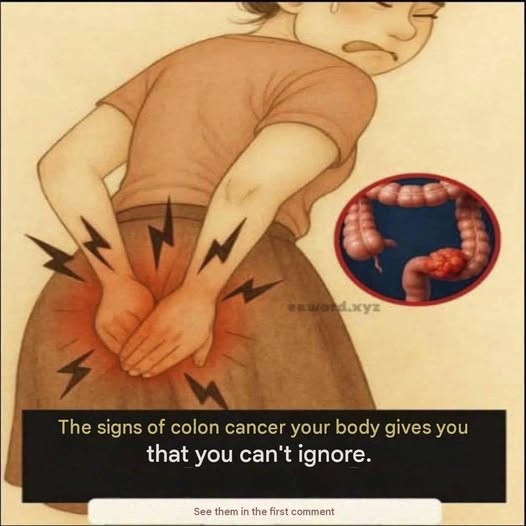
Colon cancer is one of the most common and deadly diseases in the world, but also one of the most preventable if detected early. According to the World Health Organization, this type of cancer ranks third globally and affects both men and women, especially those over 50. The worrying thing is that many people don’t experience obvious symptoms in the early stages, or they ignore certain signals their body is giving them.
That’s why knowing the early symptoms of colorectal cancer can make the difference between timely detection and a late battle. In this article, we explain the six most common signs of colon cancer that you should never ignore, as well as offer prevention tips and advice on when to see a doctor.
1. Persistent changes in bowel habits
One of the most common warning signs is a change in your bowel habits that persists for more than a few weeks. This may include:
Frequent or prolonged diarrhea
Constipation that does not go away
Sensation of incomplete evacuation
These changes, although they may be due to other less serious conditions such as irritable bowel syndrome, should be evaluated if they persist or worsen, as they may indicate an obstruction or alteration in the bowel caused by a tumor.
2. Blood in the stool or rectal bleeding
Seeing blood when you go to the bathroom is a major warning sign. Sometimes the blood may be visible (bright red or dark brown), but in other cases it is microscopic and can only be detected through testing. This bleeding may be due to:
Hemorrhoids (in many cases benign)
Anal fissures
Or, in more serious cases, to colon cancer
Don’t automatically assume it’s something minor. If you repeatedly notice blood in your stool or on the toilet paper, consult a doctor without delay.
3. Frequent abdominal pain
Persistent abdominal pain or discomfort, especially in the lower abdomen, can be a warning sign. Some people describe it as:
Colic
Persistent gases
Abdominal bloating
Feeling of pressure
This pain may be related to the presence of a tumor that is growing and affecting the normal functioning of the large intestine.
4. Unexplained weight loss
Losing weight without dieting or changing your eating habits can be a sign that something is wrong. In the case of colon cancer, weight loss may be due to:
The tumor’s energy consumption
The body fighting against disease
Problems absorbing nutrients
If you are losing weight rapidly for no apparent reason, it is essential to have a complete medical check-up.
5. Constant weakness or fatigue
Colon cancer, especially if it causes internal bleeding, can lead to iron deficiency anemia. This causes the body to have fewer red blood cells to carry oxygen, resulting in symptoms such as:
Extreme fatigue
Unexplained weakness
Difficulty concentrating
Pallor
Don’t ignore chronic fatigue, especially if it’s accompanied by other gastrointestinal symptoms.
6. Thin or pencil-shaped stools
A change in stool consistency—especially if stools become thinner or narrower than normal—can indicate a partial obstruction of the colon. This symptom is often overlooked, but it can be an early sign of a tumor blocking the intestine.
When should I see a doctor?
You should consult a professional if:
You are over 45 years old (even without symptoms)
You have one or more of these signs for more than 2 weeks
You have a family history
Who is at greater risk?
The risk of colon cancer increases with age, especially after age 50. Other risk factors include:
Family history of colon cancer.
Low fiber, high processed meat diet.
Sedentary lifestyle.
Obesity.
Smoking and excessive alcohol consumption.
Inflammatory bowel diseases such as ulcerative colitis or Crohn’s disease.
What should you do if you experience these symptoms?
If you identify one or more of these symptoms and they persist for more than a few weeks, consult your doctor. The diagnosis may include:
Blood test.
Fecal occult blood tests.
Colonoscopy, which allows direct viewing of the inside of the colon and detection of polyps or tumors.
Colon cancer can be prevented and treated effectively if detected early. That’s why paying attention to the signals your body gives you is vital.
Don’t wait for symptoms to worsen. If something doesn’t feel right, don’t ignore it. Seeking medical help early can save your life or the life of someone you love.
