
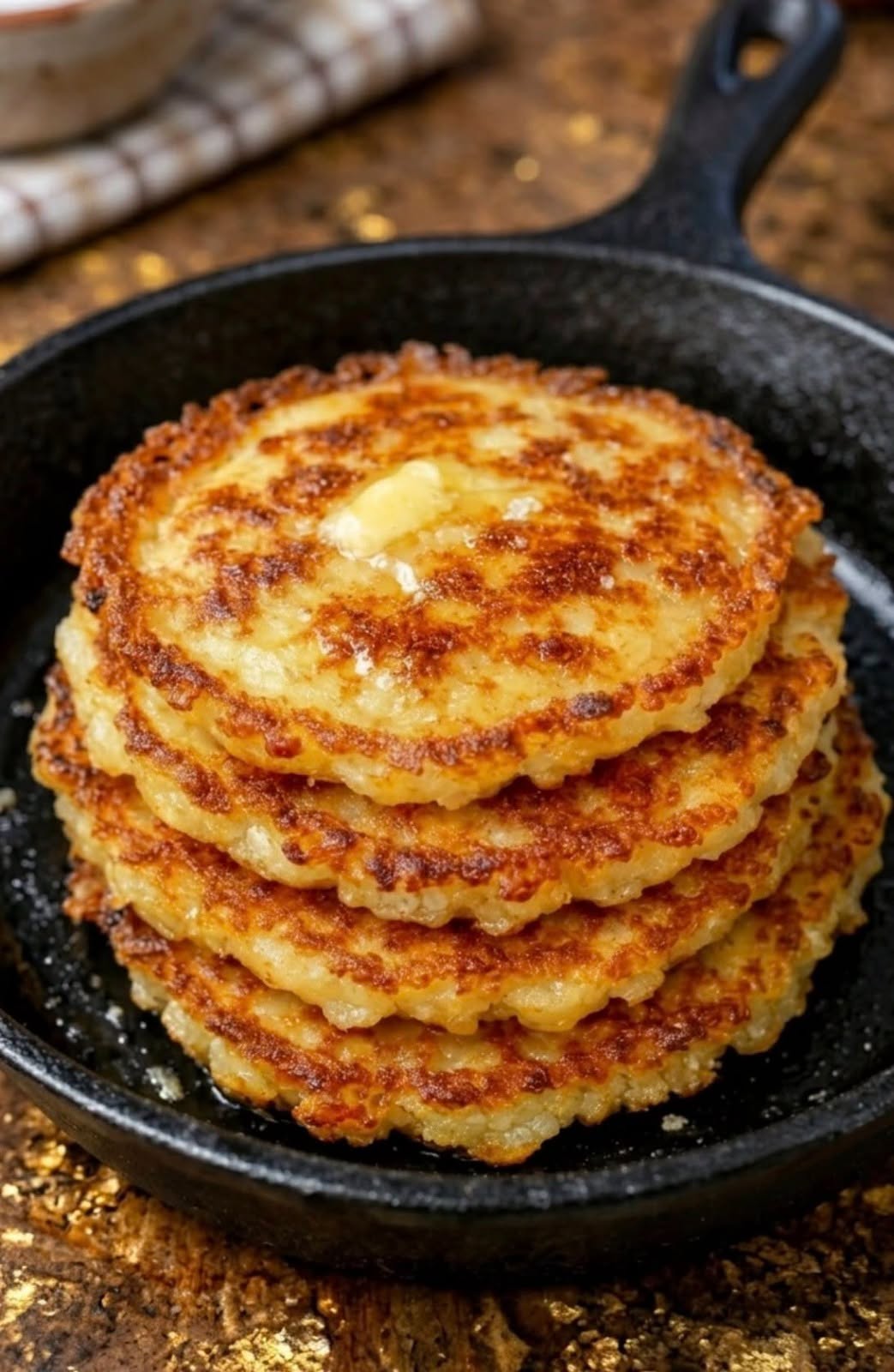
There is a very specific kind of magic that happens when a drop of bacon grease hits a screaming hot cast-iron skillet. If you grew up in the South, or if you’ve ever been lucky enough to sit at a farmhouse kitchen table while a meal was being prepared, you know that sound. It’s the sound of history, of patience, and of a love language spoken through food.
Today, we’re going back to our roots with a recipe that has fed generations: Southern Hoe Cakes.
Also known as Johnny cakes, ashcakes, or simply cornmeal flatbreads, these humble little pancakes are the definition of farmhouse simplicity. Historically, they were cooked right on the blade of a garden hoe over an open fire. Today, we use a good old-fashioned cast-iron skillet, but the soul of the recipe remains exactly the same. What I love most about this recipe is that the batter relies on just four basic ingredients. It’s foolproof, incredibly cheap to make, and delivers that deep, nostalgic, homemade flavor we all crave on a chilly evening.
Why This Recipe is a Southern Treasure
As someone who truly appreciates the science behind good cooking, I can tell you that the secret to a perfect hoe cake isn’t a long list of fancy ingredients—it’s all about the heat and the hydration.
When you let the cornmeal rest in the buttermilk, the grains absorb the liquid and soften, which gives the cake a tender center. Then, when that batter hits a properly preheated, greased skillet, the immediate blast of heat creates a magnificent, golden-brown crust. That contrast between the crispy, savory edges and the soft, steaming middle is what makes these cakes absolutely irresistible.
The 4-Ingredient Batter You’ll Need
You probably have everything you need right in your pantry. Here is what goes into the bowl, along with a few friendly substitutions if you need them.
For the Batter:
- 1 cup yellow cornmeal: Stone-ground is wonderful if you can find it, but standard grocery store cornmeal works perfectly. Substitute: White cornmeal is totally fine if that’s what your family prefers, though yellow gives a richer color.
- 1 cup buttermilk: This provides the tangy flavor and the acidity needed to tenderize the cornmeal. Substitute: If you don’t have buttermilk, add 1 tablespoon of white vinegar or lemon juice to a measuring cup, then fill the rest with regular milk. Let it sit for 5 minutes before using.
- 1 large egg: This acts as the binder to hold your cakes together.
- ½ teaspoon salt: Don’t skip this! Salt is what wakes up the corn flavor.
For the Skillet:
- 2 to 3 tablespoons bacon grease, butter, or vegetable oil: Bacon grease is the traditional choice and adds an unbelievable depth of flavor, but butter or oil will work beautifully in a pinch.
Step-by-Step Instructions
Let’s get cooking! I promise this process is as relaxing as it is delicious.
1. Heat the Skillet (The Most Important Step!)
Place your cast-iron skillet over medium heat and add your bacon grease or butter. Let it get hot. You want the fat to shimmer but not smoke. Science tip: A properly heated pan is the only way to achieve that signature golden crust without the cake soaking up excess grease.
2. Mix and Rest the Batter
While the skillet is heating, grab a medium mixing bowl. Whisk together the cornmeal, salt, buttermilk, and egg. Stir it just until it’s combined. It will look a bit like thick pancake batter. Here is the secret step: Let the batter sit for 10 to 15 minutes. This resting period allows the coarse cornmeal to hydrate and soften. If you skip this, your cakes will be gritty!
3. Fry to Golden Perfection
Give your batter one last stir. Carefully drop about ¼ cup of batter into the hot skillet for each cake. Don’t crowd the pan; give them a little room to spread. You should hear a gentle, happy sizzle the moment the batter hits the pan. If it doesn’t sizzle, your pan isn’t hot enough yet.
4. The Flip
Let them cook undisturbed for about 2 to 3 minutes. Watch the edges—they will start to look set and turn a beautiful deep golden brown. Once the edges are crispy and the bottoms are browned, gently slide a spatula underneath and flip them. Cook for another 2 minutes on the other side until equally golden.
5. Drain and Serve
Transfer the finished hoe cakes to a plate lined with a paper towel to catch any excess grease. Keep them warm in a low oven while you fry the rest of the batch.
Pro Tips, Variations & Serving Ideas
Quick Tips for Success
- Don’t Press Down: When you flip the cakes, resist the urge to press down on them with your spatula. You’ll squeeze out all the steam and lose that lovely, tender interior.
- Wipe the Skillet: If the bacon grease starts to look burnt or dark between batches, carefully wipe it out with a paper towel and add a fresh splash of grease.
Fun Variations to Try
- Cracklin’ Hoe Cakes: Fold ½ cup of crushed, crispy pork rinds (cracklins) into the batter right before frying for an extra crunch and a massive hit of Southern flavor.
- Sweet Hoe Cakes: If you have a sweet tooth, add 2 tablespoons of sugar or a drizzle of honey to the batter. They taste almost like a rustic cornmeal cookie when fried in butter.
- Spicy Jalapeño Cakes: Stir in 2 tablespoons of finely diced pickled jalapeños and a pinch of cayenne pepper for a spicy kick that pairs wonderfully with beans.
How to Serve Them
These cakes are incredibly versatile. For a true Depression-era, comforting meal, serve them in a basket lined with a clean tea towel alongside a big pot of simmering pinto beans or collard greens. Use the cakes to soak up the delicious “pot likker” right from your bowl!
For a simpler, cozy breakfast, serve them hot on a plate with a generous pat of melting butter and a drizzle of sorghum molasses or maple syrup. They pair beautifully with a warm cup of coffee or sweet tea.
Frequently Asked Questions
Q: Why are my hoe cakes falling apart when I flip them? A: This usually happens for two reasons. First, the skillet might not have been hot enough, so the crust didn’t form properly. Second, the batter might need another minute or two to cook on the first side before flipping. Give them a little more time to set!
Q: Can I make these ahead of time? A: Hoe cakes are absolutely best eaten fresh and hot right out of the skillet. However, if you have leftovers, they reheat beautifully.
Q: What is the best way to reheat leftovers? A: Never use the microwave, or they will turn gummy and chewy! Instead, reheat them in a dry, warm cast-iron skillet over medium-low heat for a minute or two per side, or pop them in a 350°F oven for about 5-7 minutes to crisp them back up.
Q: Are these gluten-free? A: Yes! Pure cornmeal is naturally gluten-free. Just double-check the packaging on your cornmeal to ensure it wasn’t processed in a facility that handles wheat, and you are good to go.
Let’s Keep the Tradition Alive!
I truly hope this recipe brings a little bit of farmhouse warmth and nostalgic comfort to your kitchen table. There is something so deeply grounding about making a meal from just a few humble pantry staples, and watching your family gather around to enjoy it. It reminds us that the best food doesn’t need to be complicated; it just needs to be made with care.
If you try these Southern Hoe Cakes, I would absolutely love to hear about it! Did you stick to the classic savory version, or did you try the sweet molasses route? Drop a comment below and share your memories, and please pass this recipe along to a friend who could use a taste of home today. Happy cooking, and I’ll see you in the kitchen!
