
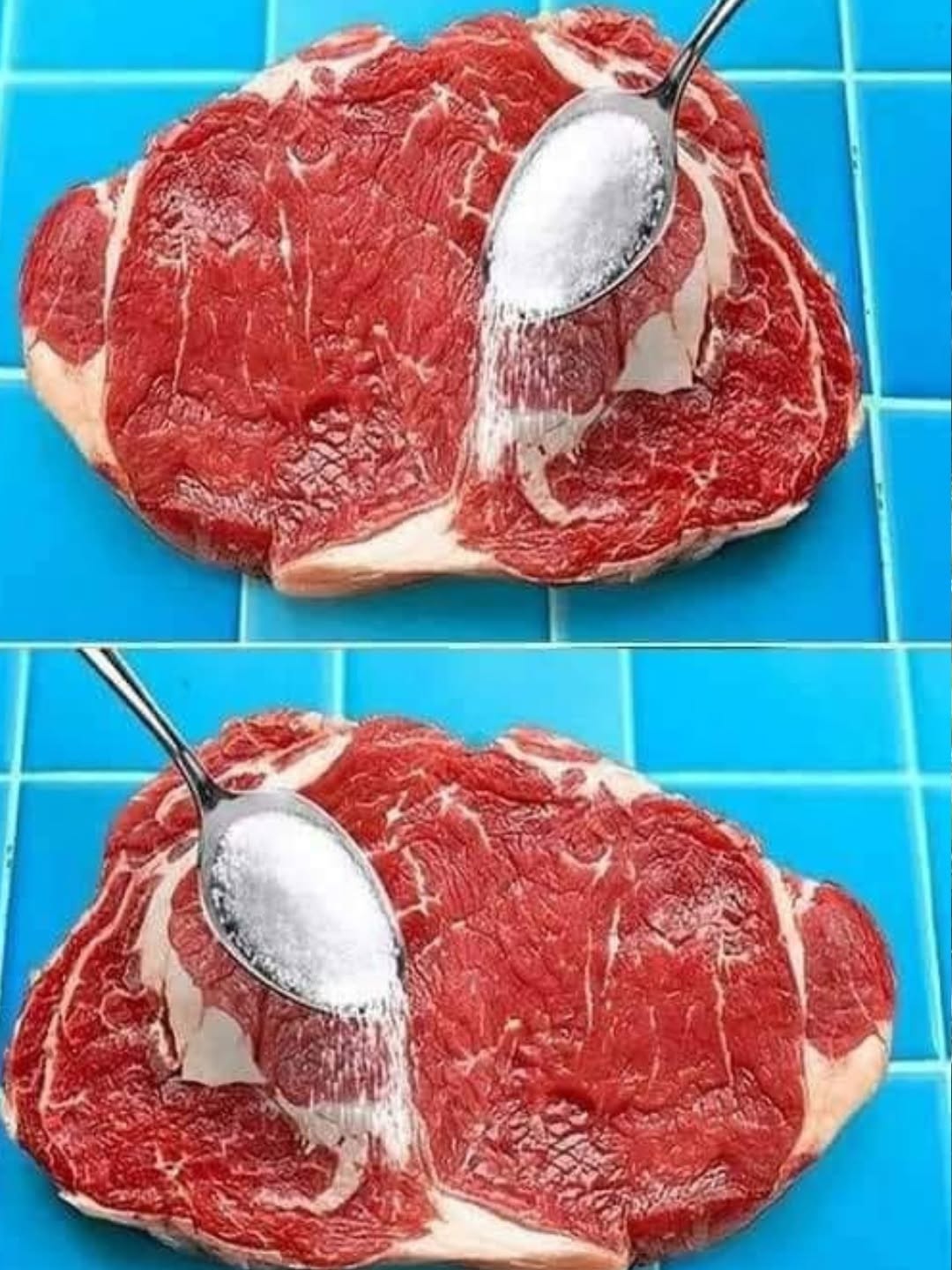
You love a good stir-fry.
You crave juicy beef in your tacos.
But too often, that tender cut turns out tough, chewy, or rubbery—even when you follow the recipe perfectly.
What if there was a cheap, pantry-stable trick that guarantees melt-in-your-mouth meat every time?
Meet your new best friend in the kitchen:
👉 Baking soda.
That’s right—the same box you use to freshen your fridge can also transform tough cuts of meat into silky, restaurant-quality bites—especially in stir-fries, marinades, and ground meat dishes.
Let’s uncover the science, safety, and simple steps behind this chef’s secret that Chinese cuisine has used for decades. ✨
🌟 Why Baking Soda Works Wonders on Meat
Baking soda (sodium bicarbonate) isn’t just for cookies and cleaning.
When used correctly, it’s a powerful meat tenderizer—and here’s how:
🔬 The Science Behind It:
Baking soda raises the pH level on the surface of the meat, making it more alkaline.
This weakens the bonds between protein molecules, preventing them from tightening up too much during cooking.
Result? Softer, juicier, more tender meat—even with lean or inexpensive cuts.
It’s especially effective for:
Stir-fries (beef, chicken, pork)
Ground meat (tacos, meatballs, dumplings)
Thinly sliced meats (like in Mongolian beef or pepper steak)
And yes—it works faster than salt, yogurt, or enzymatic tenderizers.
✅ How to Use Baking Soda Safely & Effectively:
✅ How to Use Baking Soda Safely & Effectively
The key is small amounts + short marinating time.
Too much baking soda = soapy taste.
Too long = mushy texture.
Here’s the foolproof method:
🥩 For Sliced Meat (Stir-Fry Perfection)
Slice meat thinly against the grain (~¼ inch thick).
In a bowl, combine:
1 lb (450g) meat
¾ tsp baking soda
1 tbsp water (or soy sauce/wine for flavor)
Mix well to coat every piece.
Let marinate 15–20 minutes at room temperature (or up to 30 mins in the fridge).
Rinse thoroughly under cold water (optional but recommended to remove any residue).
Pat dry and cook as usual.
👉 No rinsing? Use only ½ tsp and pair with acidic ingredients (like vinegar or wine) to neutralize.
💡 Pro Tips for Next-Level Results
🍗 Works on all proteins: Beef, chicken, pork, lamb—even squid!
🧈 Pair with cornstarch: After marinating, toss meat with 1 tsp cornstarch before cooking for extra velvety texture
🍶 Boost flavor: Replace water with rice wine, soy sauce, or egg white for richer marinade
⏱️ Don’t over-marinate: 15–30 mins max! Beyond that, texture turns mushy
🚫 Avoid with already tender cuts: Save it for flank steak, skirt steak, chicken breast, or stew meat
🍲 Great for takeout-style dishes: Kung Pao chicken, beef & broccoli, mapo tofu
❓ Common Questions Answered
Q: Does baking soda change the taste?
A: Not if used correctly. Rinsing removes any aftertaste. Many chefs skip rinsing when using tiny amounts (½ tsp or less).
Q: Can I use baking powder instead?
A: No. Baking powder contains acid and won’t have the same alkalizing effect.
Q: Is it safe to eat?
A: Yes! Baking soda is food-grade and commonly used in recipes (like pretzels and ramen noodles). Just stick to small doses.
Q: Can I freeze meat after marinating?
A: Yes! Marinate, then freeze in portions. Thaw and cook—no need to rinse again.
🍽️ When to Use This Trick
🍜 Weeknight stir-fries (juicy beef in 10 minutes!)
🌮 Taco night (softer ground beef or chicken)
🥟 Dumpling fillings (tenderer texture)
🍤 Quick Asian-inspired dishes (restaurant-quality at home)
Because who doesn’t want tender meat without paying premium prices?
❤️ Final Thought: Great Cooking Doesn’t Have to Be Complicated
You don’t need a sous-vide machine or exotic ingredients to make something magical.
Sometimes, all it takes is:
A box of baking soda
A few minutes
And the courage to try something unexpected
And when your partner says, “How did you make this so tender?”
Or your kid eats their veggies just to get to the beef…
You’ll know:
You didn’t just cook dinner.
You leveled up.
