
We pay attention to chest pain.
We know about shortness of breath.
But what if one of the earliest signs of heart trouble isn’t in your chest at all?
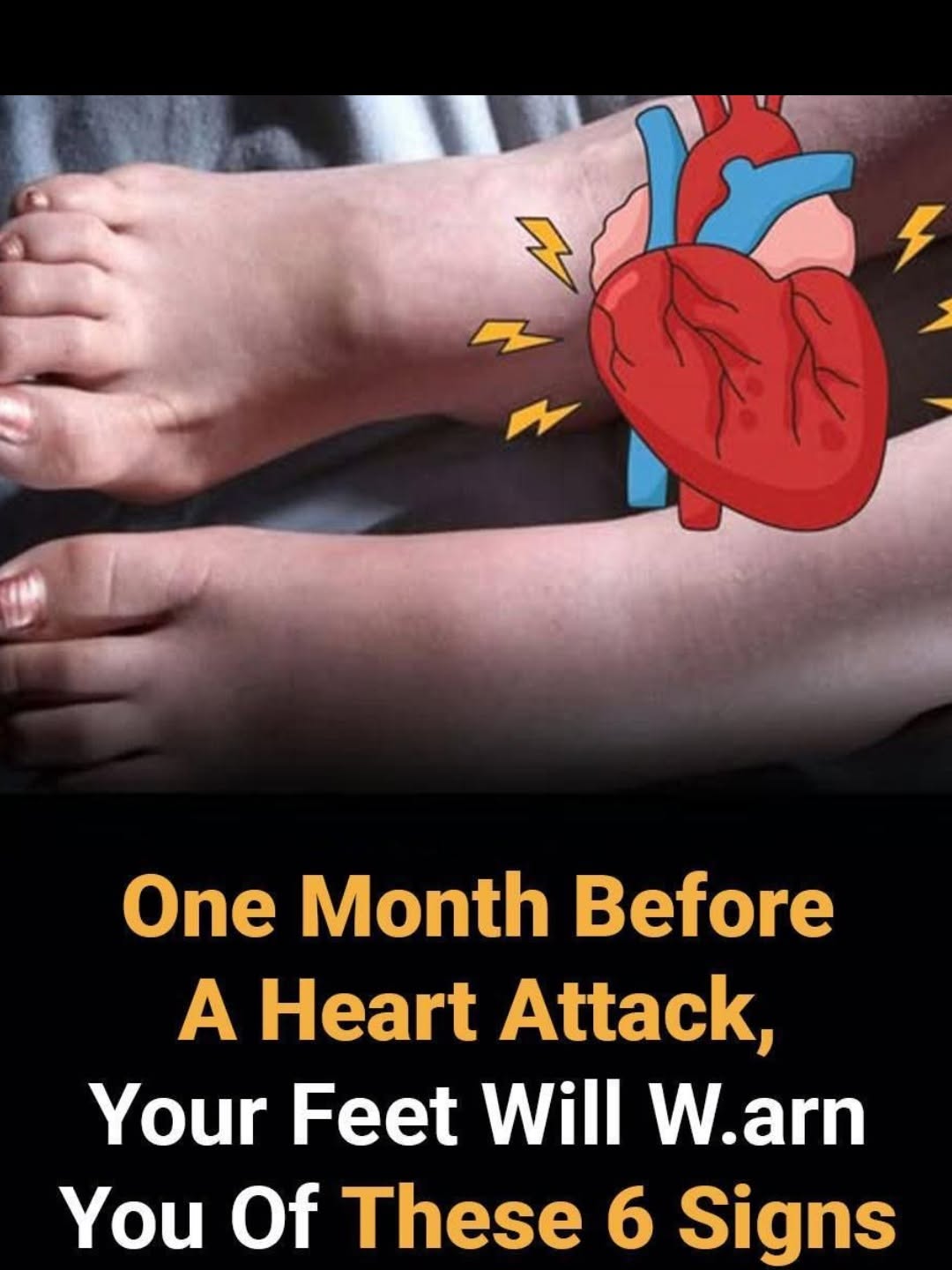
It’s in your feet.
Often overlooked, your feet can act as a window into your cardiovascular health. Since they’re the farthest from your heart, poor circulation and oxygen deprivation show up there first — sometimes weeks or months before major symptoms appear.
When your heart struggles to pump blood efficiently, your extremities suffer. And your feet respond with silent — but serious — warning signs.
Here are 6 foot signals that could mean your heart needs attention, backed by cardiologists and vascular experts.
🔔 1. Cold Feet or Toes (Even in Warm Weather)
🧊 What it feels like:
Your feet never seem to warm up — even with socks, blankets, or heating pads.
🫀 Why it happens:
Poor circulation due to weakened heart function or narrowed arteries reduces blood flow to your extremities.
✅ Key clue:
If only one foot is cold, it could signal a blocked artery (peripheral artery disease).
🔔 2. Swelling in Feet and Ankles (Edema)
💧 What it looks like:
💧 What it looks like:
Puffiness that leaves indentations when pressed; shoes feel tight by evening.
🫀 Why it happens:
A struggling heart pumps less effectively → blood backs up in veins → fluid leaks into tissues.
📌 Common with:
Heart failure
Right-sided heart dysfunction
Worsens after standing or sitting for long periods
🚨 Don’t ignore it:
Sudden or severe swelling needs immediate medical evaluation.
🔔 3. Foot Discoloration – Blue, Purple, or Pale Skin
🎨 What you might see:
Bluish tint (cyanosis) around toes
Mottled, patchy skin
Pale soles that don’t pink up quickly when warmed
🫀 Why it happens:
Low oxygen levels in the blood or severely restricted blood flow — often linked to:
Congestive heart failure
Peripheral artery disease (PAD)
Blood clots
⚠️ This is a red flag:
Discoloration means tissues aren’t getting enough oxygen.
🔔 4. Numbness or Tingling (“Pins and Needles”)
⚡ What it feels like:
A constant tingle, burning, or loss of sensation in feet and toes.
🫀 Why it happens:
Reduced blood flow damages nerves over time — a condition called peripheral neuropathy, often tied to:
Poor circulation
Diabetes + heart disease combo
Early-stage PAD
🧠 Important:
Many mistake this for “just aging” — but it could be vascular damage.
🔔 5. Sores That Won’t Heal
🩹 What to watch for:
Cuts, blisters, or ulcers on toes, heels, or pressure points that take weeks to heal — or get worse.
🫀 Why it happens:
Without proper blood flow, your body can’t deliver nutrients and immune cells needed for repair.
🔗 Strongly linked to:
Peripheral artery disease
Diabetic foot complications
Advanced heart disease
🛑 Risk:
Untreated sores can lead to infection, gangrene, or amputation.
🔔 6. Pain When Walking (Claudication)
🦵 What it feels like:
Cramping, aching, or fatigue in the calves, thighs, or buttocks while walking — that goes away with rest.
🫀 Why it happens:
Muscles aren’t getting enough oxygen during activity due to blocked arteries — a classic sign of peripheral artery disease (PAD).
📊 Did you know?
People with PAD have a 6–7x higher risk of heart attack or stroke.
❤️ What You Should Do If You Notice These Signs
Don’t panic — but do act.
These symptoms don’t always mean heart failure…
But they are a call to check in with your doctor.
✅ Steps to Take:
Schedule a cardiovascular check-up
Ask for tests like:
Ankle-brachial index (ABI) – checks leg blood flow
Echocardiogram – evaluates heart function
Blood work – cholesterol, inflammation markers
Monitor other heart health factors:
Blood pressure
Blood sugar
Cholesterol levels
Lifestyle changes that help:
Walk daily (improves circulation)
Quit smoking
Eat heart-healthy foods (low sodium, high fiber)
Manage stress and sleep well
❤️ Final Thought: Sometimes, the Loudest Warnings Come From the Quietest Places
You don’t need chest pain to have heart trouble.
Sometimes, the first cry for help comes from your feet — cold, swollen, discolored, or hurting.
And if you listen early, you may catch a problem before it becomes a crisis.
Because your heart doesn’t always shout.
Sometimes, it whispers through your toes.
So next time your feet feel “off”…
Don’t just blame the shoes.
Look deeper.
Because paying attention to the small signals today could save your life tomorrow. 💙
