
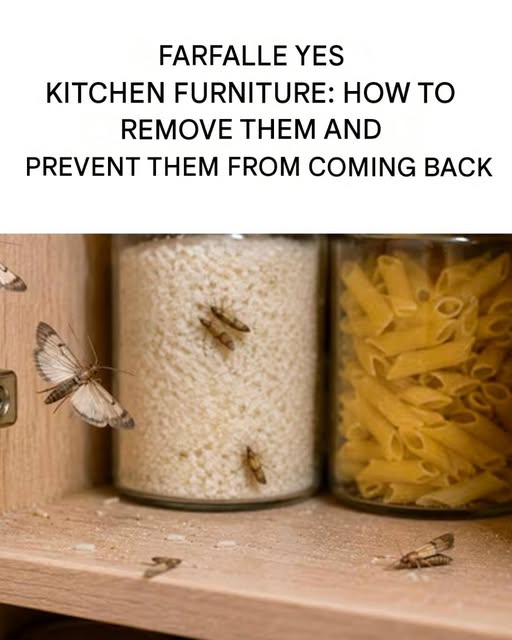
Finding small butterflies in your kitchen cabinets is a warning sign you shouldn’t ignore. These are often food moths , insects that can infest pasta, flour, rice, cereals, biscuits, dried fruit, and other foods stored in the pantry.
Seeing one fly doesn’t necessarily mean the infestation has just begun. The larvae can, in fact, be hidden inside the packages for a long time before the adult insects appear.
Where do pantry butterflies come from?
Giant hailstorms in September: Which areas in Italy are most at risk?
Food moths can enter your home through already infested food. Eggs and larvae are very small and can be found inside or near packaging, making them difficult to spot when you buy them.
Once they enter the pantry, they can move from one product to another and lay new eggs.
For this reason, finding a butterfly near the kitchen cabinets is a good reason to carefully check the entire pantry.
How to tell if you have an infestation
The first step is to check especially dry foods.
You must carefully observe the packaging of:
Flour;
pasta;
rice;
cereals;
cookies;
dried legumes;
dried fruit;
spices;
animal feed.
In addition to larvae, cobweb-like filaments , small lumps, cocoons, or unusual residues may appear inside the packages.
Even seemingly unopened packaging can be contaminated, so it’s important to carefully check foods that have been stored for a long time.
The first thing to do: completely empty the furniture
To eliminate moths, it is not enough to kill the moths you see flying.
You need to completely empty the cabinet or pantry and check all the products one by one.
Obviously infested foods should be discarded. It’s best to seal them in a bag before taking them out of the kitchen, avoiding leaving them in the trash can.
How to clean kitchen cabinets
After removing all the food, you should thoroughly clean the shelves, corners, cracks and holes of the adjustable shelves.
A vacuum cleaner can be helpful in removing any debris, larvae, or cocoons hidden in corners.
You can then wash the surfaces with water and a detergent suitable for the furniture material. Finally, it’s important to dry them completely before putting food back on them.
Beware of opened packages
Once cleaning is complete, it’s best not to leave pasta, flour, and other dry foods in their original, opened containers.
Transferring them to airtight containers helps reduce the risk of any infestation spreading to other products.
Containers must be clean and perfectly dry before use.
Pheromone traps can help
Pheromone traps specifically designed for food moths can be useful for monitoring the presence of adult insects and reducing their numbers.
However, they shouldn’t be considered a sufficient solution when the infestation is already present. The key remains identifying and eliminating the source, i.e., the contaminated food and any residues in the pantry.
What not to do
One of the most common mistakes is spraying insecticides directly near food .
It’s best to avoid using chemicals on shelves where food is stored, especially if they aren’t specifically intended for that purpose. Mechanical cleaning and the removal of infested products are the first step.
Even continuing to store suspicious packaging can encourage the return of moths.
How to prevent moths from coming back
Once you’ve eliminated the infestation, it’s helpful to adopt some simple habits.
Checking dry foods periodically, especially those purchased a long time ago, allows you to quickly identify any anomalies.
Keeping your pantry clean, using airtight containers, and not stockpiling large amounts of dry goods helps make it harder for moths to spread.
If moths continue to appear despite thorough cleaning, it’s possible that some hidden source is causing the problem. In that case, you should recheck all food items and hard-to-reach areas of the cabinet.
The key point is therefore simple: you can’t just eliminate the adult butterflies . To truly solve the problem, you need to find the infested product, thoroughly clean the pantry, and then store the food in tightly closed containers.
