
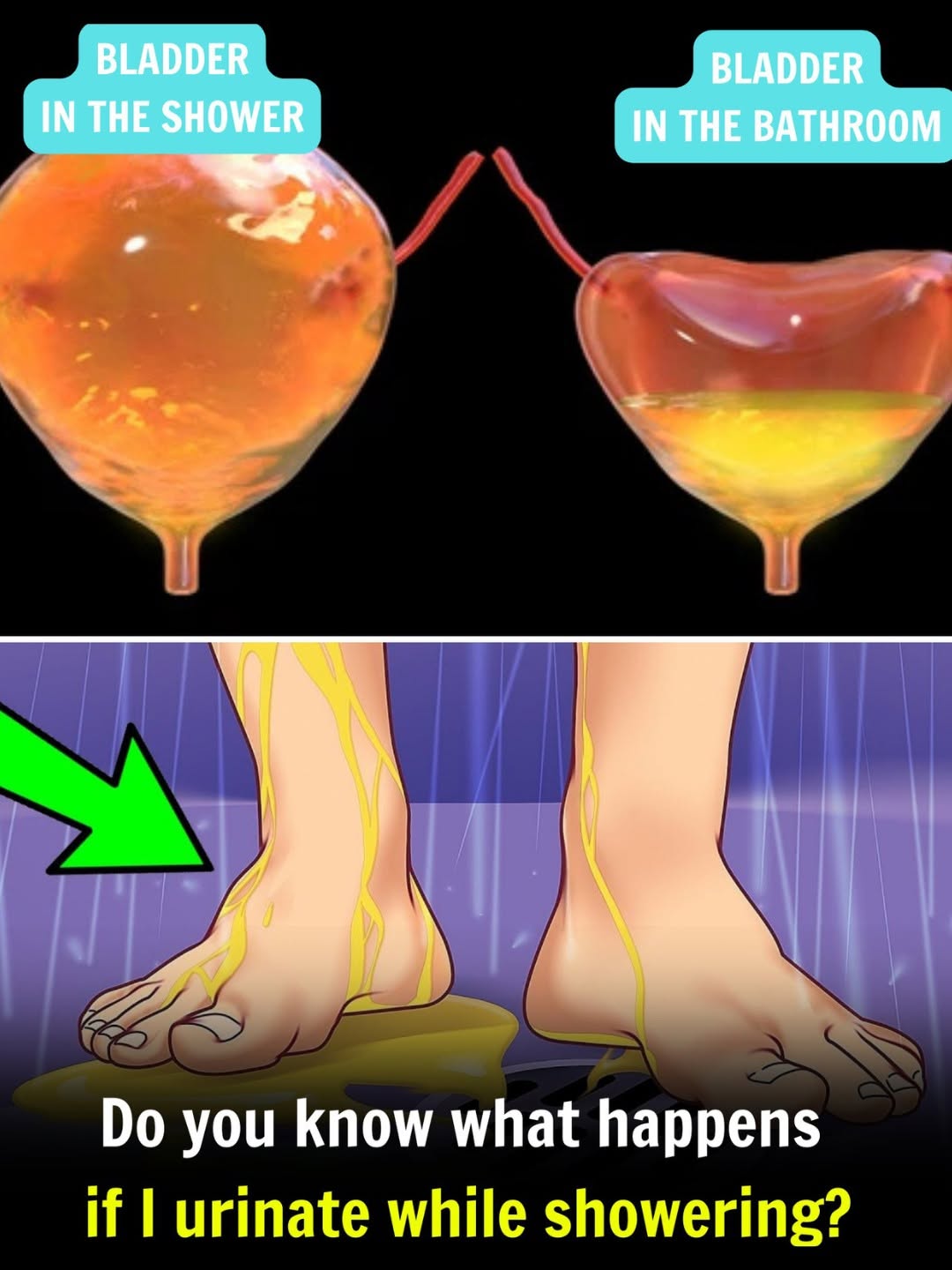
Let’s talk about something everyone thinks about but rarely says out loud:
Peeing in the shower.
It seems so harmless, right?
You’re already naked. The water’s running. You feel that familiar tingle… and suddenly, it feels almost wasteful not to go.
Plus, there’s that viral stat:
👉 One pee = one flush saved = 579 gallons per person, per year.
Multiply that by millions, and we’re talking about hundreds of billions of gallons saved annually. 🌍💦
So why would a doctor say don’t do it?
Enter Dr. Alicia Jeffrey-Thomas, a pelvic health physical therapist who’s been sounding the gentle alarm:
While peeing in the shower might be eco-friendly, it could be quietly harming your bladder—and your pelvic floor—especially if you’re a woman or were assigned female at birth.
Let’s dive in—not to shame, but to understand. Because when it comes to our bodies, awareness is power.
💧 The Case for Peeing in the Shower: Yes, It Saves Water
Let’s start with the good news:
✅ It conserves water.
Every time you skip a flush, you save 1.6–3 gallons.
Do the math:
Average person pees 6–8 times a day
1 flush ≈ 2 gallons
Peeing in the shower once daily = ~730 flushes saved/year
= 1,460 gallons saved per person annually (even more than often quoted!)
If every adult in the U.S. did this just once a day?
We’d save over 400 billion gallons a year—enough to fill millions of backyard pools. 🏊♂️
That’s real environmental impact.
And honestly? It makes logical sense.
But here’s where biology meets habit—and things get tricky.
⚠️ The Hidden Risk: Your Bladder Doesn’t Know the Difference
Here’s what most people don’t realize:
Your body learns through repetition.
When you always pee in the shower—the sound of running water becomes a conditioned trigger for urination.
And over time, this can lead to a sneaky problem:
👉 Urge incontinence — that sudden, “I have to go NOW” feeling, even when your bladder isn’t full.
Why?
Because your brain starts linking the sound of water with emptying your bladder.
Soon, you’re not just peeing in the shower…
You’re rushing to the bathroom when you wash your hands.
Or hearing a faucet drip and feeling an urgent pull.
As Dr. Jeffrey-Thomas explains:
“The nervous system doesn’t distinguish between context. If you consistently pee under running water, it begins to expect that signal. Over time, it can create bladder hypersensitivity.”
And once that association forms? It’s hard to undo.
🧠 How Habit Shapes Bladder Health
Think of your bladder like a smart, slightly dramatic roommate:
It learns routines—and rebels when they change.
Healthy bladder habits include:
Emptying fully when you go
Going when you need to—not just because you “might later”
Not ignoring signals… but also not responding to false alarms
But peeing in the shower regularly—even if you don’t need to—can train your body to:
Go “just in case”
React to cues (like water sounds) instead of actual fullness
Develop urgency or frequency (peeing too often)
For many women, this can escalate into overactive bladder (OAB)—a condition affecting 1 in 4 women over 40, but increasingly seen in younger adults due to poor bladder habits.
And once OAB sets in? It’s not just inconvenient.
It can affect sleep, confidence, workouts, and intimacy.
👩⚕️ Who Should Be Extra Cautious?
While anyone can develop bladder sensitivity, these groups should especially avoid making peeing in the shower a habit:
🤰 Pregnant women – Already at higher risk for pelvic floor strain and incontinence
🧓 Postpartum & menopausal women – Hormonal shifts weaken pelvic support
🏃 Athletes or fitness enthusiasts – High-impact activities increase pelvic pressure
😣 Anyone with existing urinary urgency, frequency, or leakage
Even if you feel fine now, habits formed today can shape pelvic health tomorrow.
💡 So… What Should You Do?
We’re not here to take away your eco-friendly wins.
We’re here to help you make informed choices—for both the planet and your body.
✅ The Balanced Approach:
🌱 Save water? Absolutely. Just not at the cost of bladder health.
🚫 Avoid making peeing in the shower a routine. Especially if you’re not actually needing to go.
🛁 If you do go, keep it occasional—not a daily reset button.
🚽 Use a dual-flush toilet or put a filled water bottle in the tank to reduce flush volume—eco-friendly without training your bladder wrong.
💪 Bonus: Strengthen Your Pelvic Floor
Strong pelvic muscles = better bladder control.
Try:
Daily Kegels (gently squeeze as if stopping urine—but don’t practice while peeing!)
Avoiding chronic straining (from constipation or heavy lifting)
Seeing a pelvic floor PT if you’ve had kids, surgery, or notice leaks
🌿 Final Thought: Small Habits, Big Consequences
This isn’t about policing your bathroom behavior.
It’s about respecting your body’s intelligence.
Your bladder, urethra, and pelvic floor are finely tuned systems—designed to work best with consistency, awareness, and care.
And while saving water is noble (and necessary!), we don’t have to choose between the planet and our health.
There are plenty of ways to conserve water that don’t involve retraining your nervous system. 💧💚
